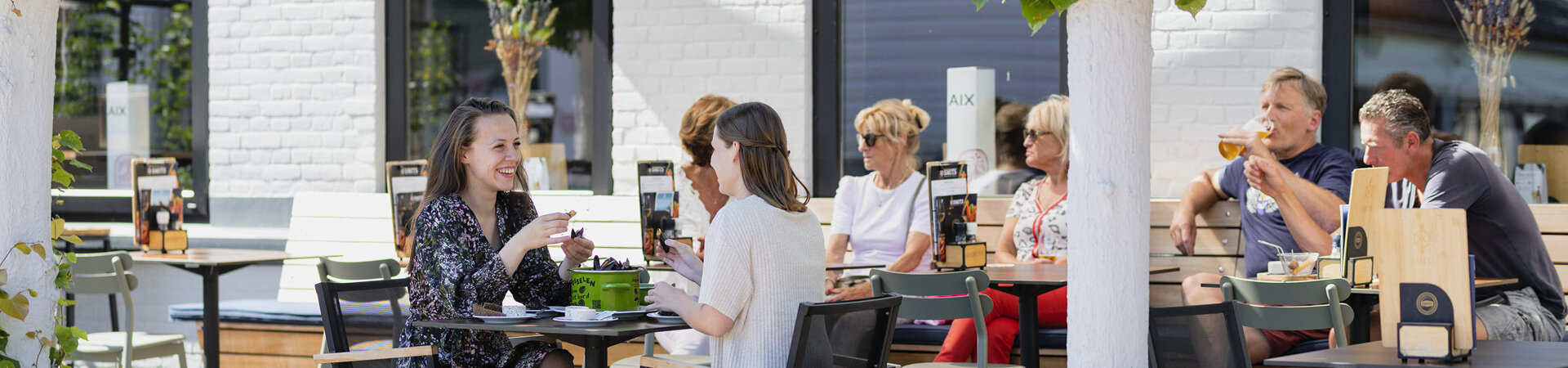
When you think of Yerseke, mussels and oysters immediately come to mind. Mussel boats are moored in the harbors, mussel farms surround the village, and at the historic oyster beds, you can taste—both literally and figuratively—Yerseke’s salty history. Take a stroll along the water, watch the hustle and bustle in the harbors, and then pull up a chair at one of the restaurants for some mussels or oysters.
Yerseke is just a short distance from the town of Kapelle, making it a great destination for an afternoon or a day on the Oosterschelde.
From a fishing village to the hub of the shellfish industry
Fishing had long been important to Yerseke, but starting around 1870, a lot changed. Parts of the Oosterschelde were used as breeding grounds for mussels and oysters, and the shellfish industry grew rapidly. Oyster farming, in particular, brought a great deal of economic activity and new residents to the village in a short period of time.
So much money was made that Yerseke even earned the nickname “Zeeland’s Klondike,” a reference to the gold rush in Canada. This period of prosperity was not without its difficulties. Harsh winters, disease, and changes in the Oosterschelde had a major impact on oyster and mussel farming.
Today, the connection to the water is evident everywhere. Mussel boats come and go, and various companies in Yerseke process and trade shellfish for both domestic and international markets.
Discover the ports
Take a walk along the harbors and see which fishing boats are moored there. On the bow, you’ll often see the letters YE, followed by a number. YE stands for Yerseke and indicates where the ship is registered.
Yerseke is also home to the Dutch Mussel Auction. Shipments of mussels are sampled and inspected here. Among other things, the size and meat weight are assessed. The mussels are then sold to wholesalers.
Would you like to know exactly how a small mussel grows into an edible mussel? Then read more on our page about Zeeland mussels.
Historic oyster pits
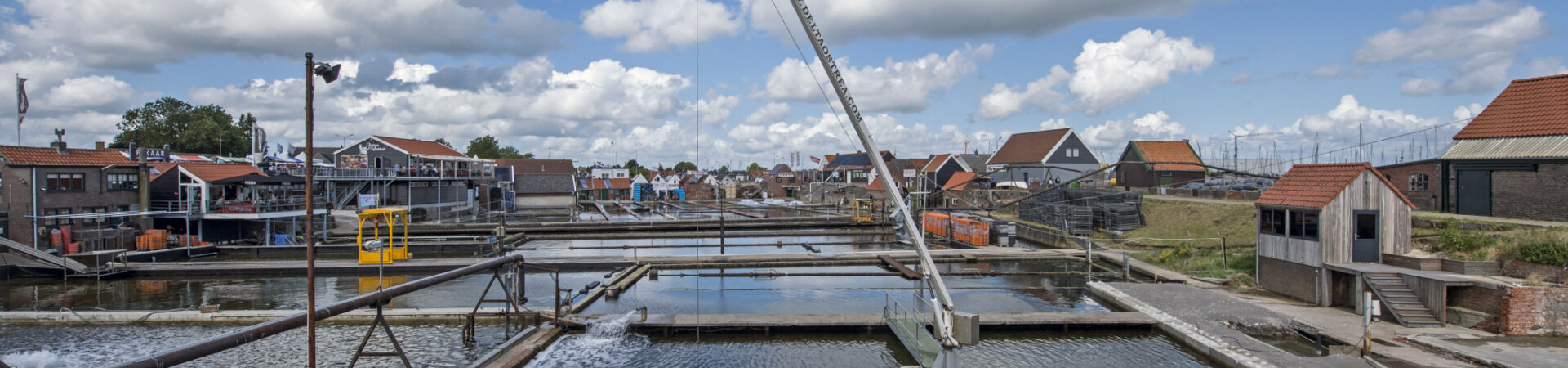
The historic oyster pits of Yerseke are located near the harbors. The three pits were constructed between 1871 and 1883 and serve as a reminder of the period when oyster farming flourished here.
Take some time to stroll among the oyster beds and the old oyster sheds. Several businesses are still operating here, and you can find fresh shellfish and crustaceans around the oyster beds.
Oyster farming itself has a fascinating history. In the past, for example, lime-washed roof tiles were used to collect young oysters. You can read more about this method, the history of oyster farming, and the difference between flat oysters and creuse oysters on the Oysters page.


Pick your own
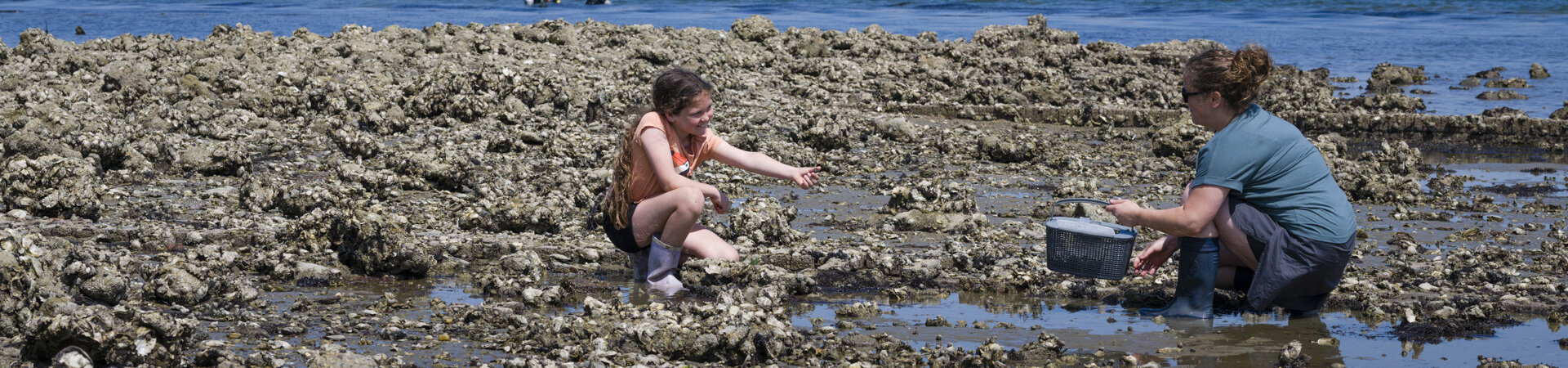
Would you like to go out and find some tasty treats from the Oosterschelde yourself? You’re allowed to gather shellfish for personal use at various spots along the coast. The best time to gather oysters is two hours before and two hours after low tide. At high tide, the shellfish disappear underwater and you won’t be able to find them anymore. While gathering, keep a close eye on the tide and the weather. That way, you won’t be caught off guard by the rising water. You may gather up to 10 kg, for personal use only.
Check in advance where you’re allowed to forage, how much you can take, and when low tide is. Wear sturdy shoes: oyster shells are sharp, and rocks and mudflats can be slippery.
Out and about with a guide
Would you like to learn more about mussel and oyster farming? Then take a guided tour. During the tour, you’ll explore the harbors and oyster beds and hear stories about the people who have made their living from the water here for generations.
Depending on the excursion you choose, you can also take a tour of a mussel processing plant or go oyster foraging yourself. This way, you’ll not only see Yerseke, but you’ll also discover the story behind the shellfish that are brought ashore here. Check out the Touristshop Yerseke website for all the options.
Practical information
Yerseke is easily accessible by bike and car from Kapelle and Wemeldinge. There are several parking lots around the harbors and oyster beds. From here, you can easily explore the area on foot.
Would you like to learn more about the history of the village and fishing? Then combine your visit with a stop at the Oosterschelde Museum in Yerseke.