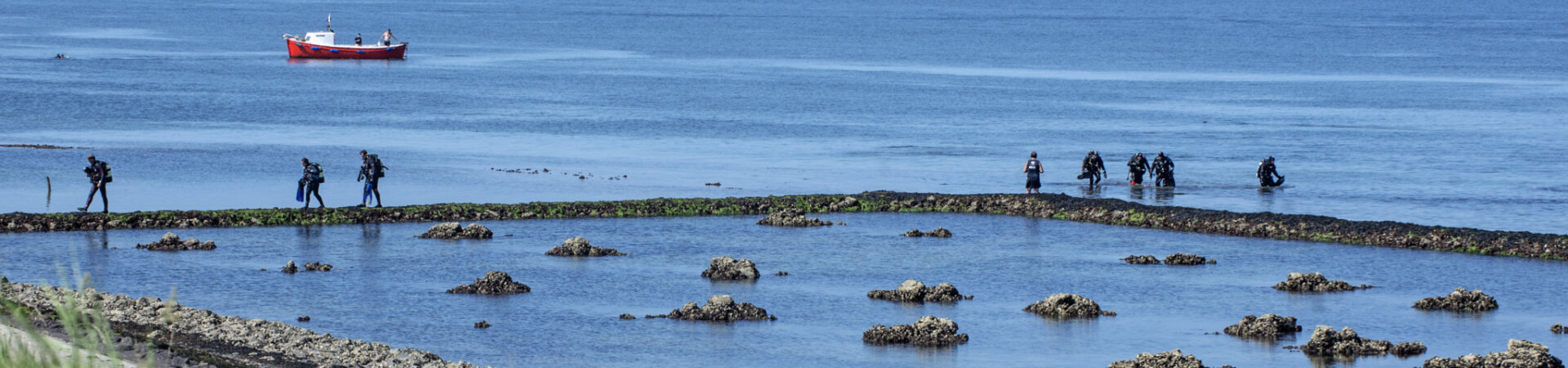
Former oyster beds
If you bike or walk along the Oosterschelde dike between Wemeldinge and Kattendijke, you’ll pass a special piece of Zeeland’s history. The former oyster beds serve as a reminder of the time when Wemeldinge played a major role in Zeeland’s oyster farming industry. Where people once worked hard, tranquility now reigns. The old basins have gradually become part of the natural landscape and make for a lovely stop along the way during a walk or bike ride along the Oosterschelde.
From Oyster Pit to Nature Reserve
At the end of the nineteenth century, oyster farming in Zeeland flourished. The oyster pits were used to store and dilute the oysters before they were sold. The fresh water from the Oosterschelde ensured that the oysters remained clean and retained their quality.
This activity came to an abrupt end during the harsh winter of 1962–1963. Due to the prolonged freeze, the Oosterschelde largely froze over, and a large portion of the oyster harvest was lost. The oyster beds near Wemeldinge also ceased to function.
A special place for plants and animals
Where people once worked hard, nature has now taken over. The former oyster beds form a sheltered spot where seawater pools, providing a habitat for all kinds of plants and animals. Take a good look around, and you’ll spot crabs, shrimp, small fish, and various types of seaweed. Birds also frequent this spot in search of food.
Thanks to its peaceful setting, it’s a lovely spot to pause for a moment and gaze out over the Oosterschelde. With a little luck, you might even spot a porpoise breaking the surface in the distance or seals resting on the sandbars.
Combine your visit
The former oyster beds are located right along the Oosterschelde dike and are easy to combine with other attractions in the area. Walk or bike further toward the beaches of Wemeldinge, visit the information centers De Duikbril and 't Schip, or learn more about the natural environment of Oosterschelde National Park.
Are you curious about how Zeeland’s shellfish industry has evolved? Then be sure to visit Yerseke, where oyster and mussel farming are still an important part of daily life.
Practical information
The former oyster beds are located along the Oosterschelde Dike between Wemeldinge and Kattendijke. Are you coming by car? Then park along the Oosterschelde Dike and walk to the oyster beds from there. Of course, the former oyster beds are also easily accessible by bike as part of a route along the Oosterschelde.
